
Metinvest Polytechnic and a major Italian metallurgy group for low-carbon steel production
Ukrainian steel industry aims to integrate into the European market as a strategic supplier of iron ore, DRI pre-reduced material, steel semi-finished products and pig iron.
To achieve this goal, decarbonization of production processes is fundamental: the European Union promotes the production and use of “clean” products in energy-intensive industrial sectors, including steel and foundries.
The Ukrainian steel industry must reduce its emissions to compete in the European market, abandoning the integrated blast furnace cycle in favor of electric steelmaking, a sector where Italy excels worldwide.
The CBAM Challenge: Decarbonize to Stay Competitive
From 2026, the implementation of CBAM (Carbon Border Adjustment Mechanism) will impose heavy EU taxes on raw steel and high-carbon semi-finished products from non-EU countries, including Ukraine. For the country under Russian siege – a candidate for European membership – the effects could be postponed to 2029, as requested by the Kyivparliament to avoid further penalizing an industry already devastated by war.
According to GMK Center estimates, Ukrainian exports to the EU risk losing 4.7 billion euros by 2030 (of which 3.3 billion in the steel sector alone) if CBAM enters into force in 2026, with an additional 2.7 billion in potential losses in industrial investments.
Regardless of timing and implementation methods, decarbonization of metallurgical supply chains is now a mandatory path. Ukrainian steel industry, which has Europe as its main market, must modernize with a green approach.
Metinvest Polytechnic’s Strategy
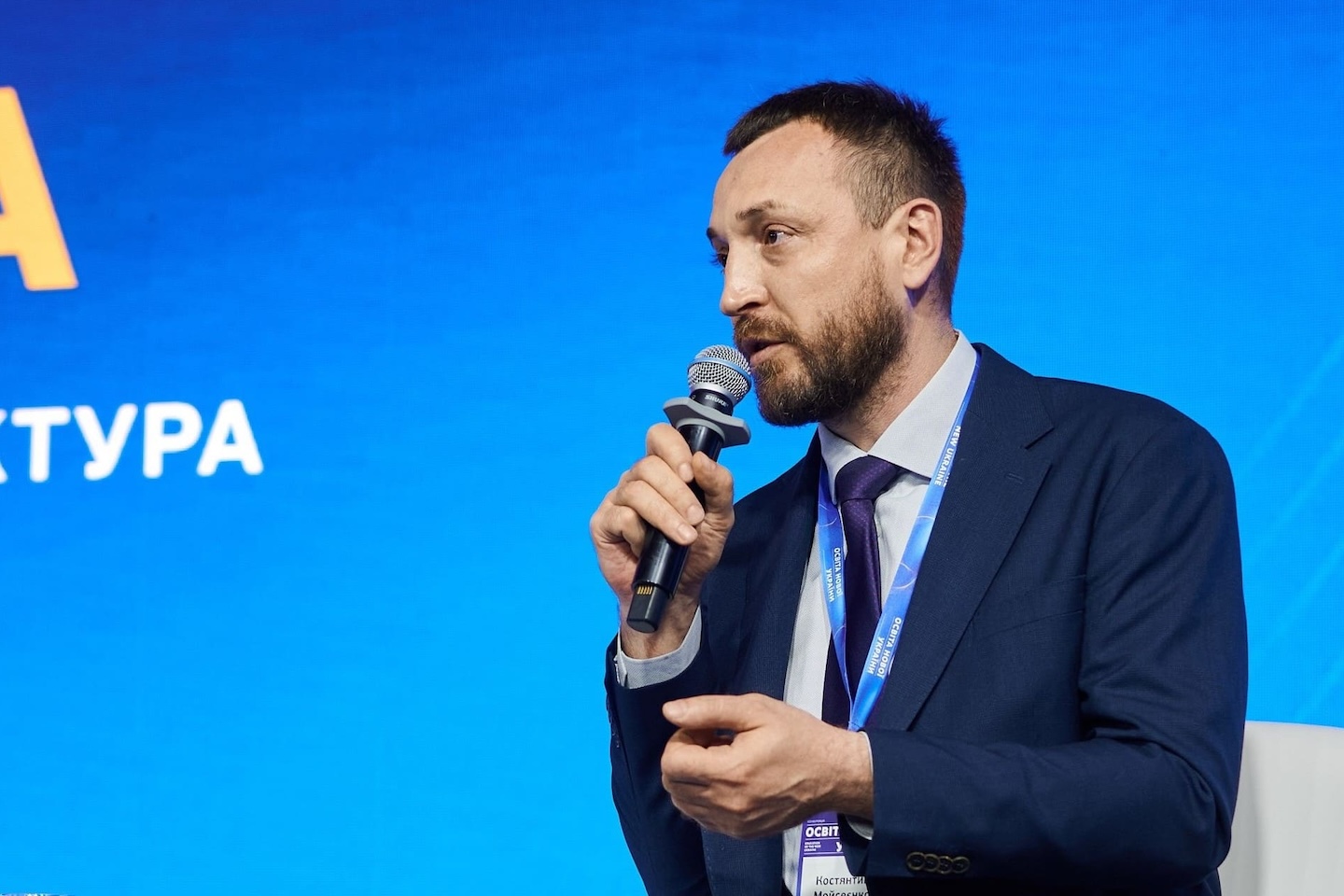
Professor Volodymyr Pashynskyi, head of the Department of Materials Science and Applied Mechanics at Metinvest Polytechnic – the first private technical university in Ukraine founded by the country’s main mining and steel group – explains the strategy: “Due to the Russian invasion, Ukraine and Metinvest have lost many metallurgical plants in the eastern part of the country. After the end of the war, it will be crucial to build new modern plants with advanced technologies for iron ore pre-processing, DRI pre-reduced production and melting for slabs destined for Metinvest rolled products.”
The Piombino Project: A Model for the Future
Italy plays a key role in this transformation. Metinvest, in joint venture with the Friulian group Danieli (world leader in steel technologies), will build from 2026 in Piombino a new electric arc furnace steelworks with an annual capacity of 2.7 million tons of hot-rolled coils. These products will primarily serve the Italian manufacturing industry, which currently imports them from Turkey and other Asian and North African countries.
The new low-emission Tuscan steelworks represents one of the main industrial investments planned in Italy in the coming years. It will use ferrous scrap, pig iron and pre-reduced material from Metinvest’s Ukrainian activities as raw materials.
The Metinvest Adria project in Piombino will be the reference model for the future modernization of the Ukrainian group’s steelworks in Zaporizhzhia and Kamyanske, when the war is over.
Excellence Training for Green Transition
Metinvest Polytechnic’s educational commitment fits into this direction. “Today we offer 16 three-semester Master’s programs,” says Professor Pashynskyi. “Among these stands out the four-semester scientific Master’s ‘Metallurgy Modernization Management’, which combines economic-managerial management and technological skills for the development of modernization processes in the metallurgical industry. It is the first high-level training program of this type in Ukraine.”
Partnership with Danieli Academy and Visit to Assofond 2025 General Assembly
Danieli actively participates in the Master’s program by hosting, between June and July 2025, three specialized Metinvesttechnicians at its Academy in Buttrio, Friuli. At the same time, Mill’s has organized participation in the Assofond 2025 General Assembly “Italian foundries in the European context: which industrial policies?”, in Soave on June 13, 2025, a networking opportunity for the Polytechnic with the Metinvest student/technician team.
The participants are Daniil Tymoshenko, deputy head of the energy engineering division of the Zaporizhzhia plant, Ruslan Kriukov, chief mechanical engineer for continuous casting machines at the Kamyanske plant, and Nataliia Chub, chief quality management system specialist at Metinvest Holding.
“The training month in Italy is the first step of a very long journey toward the modernization of Ukrainian metallurgy,” concludes Professor Pashynskyi. “Our students and technicians have the opportunity to see Danieli’s best practices and most advanced technologies for green steelmaking, from pre-reduced production to flat and long rolled steels.”